41 3 laws of robotics
Robotics: A Brief History - Stanford University Computer ... Asimov also proposed three "Laws of Robotics" that his robots, as well as sci-fi robotic characters of many other stories, followed: Law One A robot may not injure a human being or, through inaction, allow a human being to come to harm. Law Two Why are Isaac Asimov's Three Laws of Robotics important? - Quora His laws presented robots as benefical, and reshaped people's views of what robots could be. They were not perfect- his robot series was largely an They have inspired the creation of a project of The 6 laws of robotics of the European Union, but mainly, they are guides that we want from the robots...
Are the 3 laws of robotics real? - BBC Science Focus Magazine Robot kitchen arms to do your cooking might become common. At present, there are no practical robot dusters, however! Are the 3 laws of robotics real? The science fiction writer and professor of biochemistry, Isaac Asimov, wrote many early books about robots. (The movie I, Robot was based...

3 laws of robotics
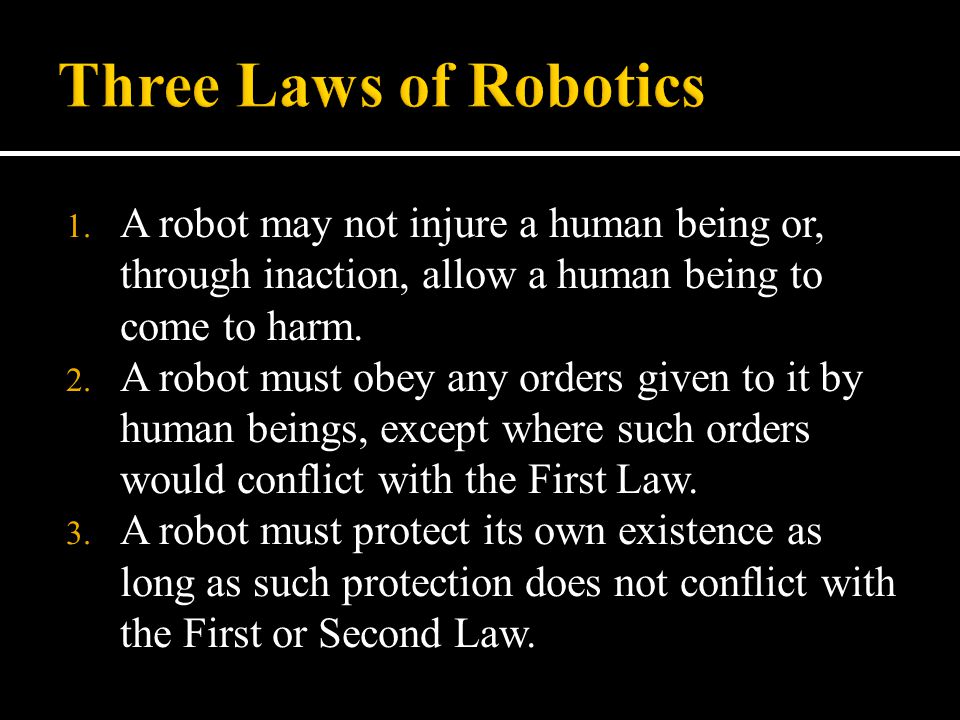
Isaac Asimov's "Three Laws of Robotics" A robot may not injure a human being or, through inaction, allow a human being to come to harm. A robot must obey orders given it by human beings except where such orders would A robot must protect its own existence as long as such protection does not conflict with the First or Second Law. Swarm robotics - Wikipedia Swarm robotics is an approach to the coordination of multiple robots as a system which consist of large numbers of mostly simple physical robots.It is supposed that a desired collective behavior emerges from the interactions between the robots and interactions of robots with the environment. This approach emerged on the field of artificial swarm intelligence, as well as the biological … 1613: The Three Laws of Robotics - explain xkcd This comic explores alternative orderings of sci-fi author Isaac Asimov's famous Three Laws of Robotics, which are designed to prevent robots from taking over the world, etc. These laws form the basis of a number of Asimov works of fiction, including most famously, the short story collection I...
3 laws of robotics. Telesurgery and Robotics: An Improved and Efficient Era Introduction and background. The concept of distance between a surgeon and a patient is not a new idea. It was explored in the 1970s by the U.S. National Aeronautics and Space Administration (NASA), which had a particular interest in treating the astronauts in space, based on the concept of remote surgery or telesurgery (TS) [].Simultaneously, the advent of robotic surgery (RS) … Isaac Asimov: The Three Laws of Robotics - YouTube Dr Asimov describes the three laws of robotics.First Law: A robot may not injure a human being, or, through inaction, allow a human being to come to... Isaac Asimov | Biography, Books and Facts Famous for stating the Three Laws of Robotics, Isaac Asimov's contributions to scientific literature have been acknowledged by esteemed awards such as Hugo, Nebula and many honorary degrees. Drei Gesetze der Robotik - Three Laws of Robotics - abcdef.wiki Wie in "The Fifth Law of Robotics" von Nikola Kesarovski bemerkt , wird "Ein Roboter muss wissen, dass er ein Roboter ist": Es wird angenommen, dass ein Roboter eine Definition des Begriffs oder ein Mittel hat, um ihn auf seine eigenen Aktionen anzuwenden.
The Path of Robotics Law by Jack M. Balkin :: SSRN Robotics and AI present the converse problem. Instead of code as a law that regulates humans, robotics and AI feature emergent behavior that escapes The second problem raised by robotics and AI is the "substitution effect." People will substitute robots and AI agents for living things — and... Premium Vector | Three laws of robotics, concept illustration, on white... . #Three-Laws в Tumblr Isaac Asimov - The Three Laws of Robotics. Of note is that this collection includes the 1956 short story "First Law," an important story not only in the Asimovian robot mythos, but for a good portion of general robot lore for the past 70-odd years as an expression of one of the Three Laws of Robotics . After 75 years, Isaac Asimov's Three Laws of Robotics need updating When science fiction author Isaac Asimov devised his Three Laws of Robotics he was thinking about androids. He envisioned a world where these human-like robots would act like servants and would need a set of programming rules to prevent them from causing harm.
3 Laws of Robotics | Board Game | BoardGameGeek 3 Laws of Robotics is a lively deduction game for 4-8 players in which you know everyone's information except your own! Each round, you ask a single question to try to figure out who is on your side, being sure to obey the laws as they're added. What are Issac Asimov''s three laws of robotics? Are they purely... Asimov's laws of robotics are not scientific laws, they are instructions built in to every robot in his stories to prevent them malfunctioning in a way that could be dangerous. The first law is that a robot shall not harm a human, or by inaction allow a human to come to harm. Nanorobotics - Wikipedia Nanoid robotics, or for short, nanorobotics or nanobotics, is an emerging technology field creating machines or robots whose components are at or near the scale of a nanometer (10 −9 meters). More specifically, nanorobotics (as opposed to microrobotics) refers to the nanotechnology engineering discipline of designing and building nanorobots with devices … Isaac Asimov's Three Laws of Robotics | Britannica And the three laws of robotics are: a robot may not injure a human being, or through inaction allow a human being to come to harm. GARY MARCUS: I think that they make for good science fiction. There are lots of plots that can turn around having these kinds of laws.
The Problem with Asimov's Three Laws of Robotics
Roboethics: The Human Ethics Applied to Robots Asimov's laws cannot be applied to robots that are designed to kill humans. Also in 2020, the U.S. army is going to live test armored robotic vehicles. Therefore, the debate in ethical and social issues in advanced robotics must become increasingly important. The current growth of robotics and the...

3 Laws of Robotics – Floodgate Games
Who Pioneered Robotics? Robotics Theory and Science Fiction. Writers and visionaries envisioned a world including robots in daily life. In 1818, Mary Shelley wrote Asimov wrote "Runaround," a story about robots which contained the "Three Laws of Robotics," which centered around Artificial Intelligence ethics questions.
The Age Of Artifical Intelligence: the future of jobs ...
Has Anyone Tested 3 Laws Robotics? - Programming & Design What Are The 3 Laws Of Robotics In I Robot? In the first law, a robot is not allowed to harm a human, or by inaction, a human can be harmed. In addition to obeying any instruction given to it by a human, a robot must avoid actions or situations that could harm itself as well.
The Three Laws of Robotics: Laws of the Text, Laws of ...
Three Laws of Robotics - Wikipedia The Three Laws of Robotics (often shortened to The Three Laws or known as Asimov's Laws) are a set of rules devised by science fiction author Isaac Asimov.
Isaac Asimov's 3 laws of robotics by Chloe Ebelhar - AHS 2023
(PDF) Control Systems in Robotics: A Review - ResearchGate robotics. Each type of control system has its pros and cons which ha ve been discussed in this paper. The process of some of the control systems like PID & …

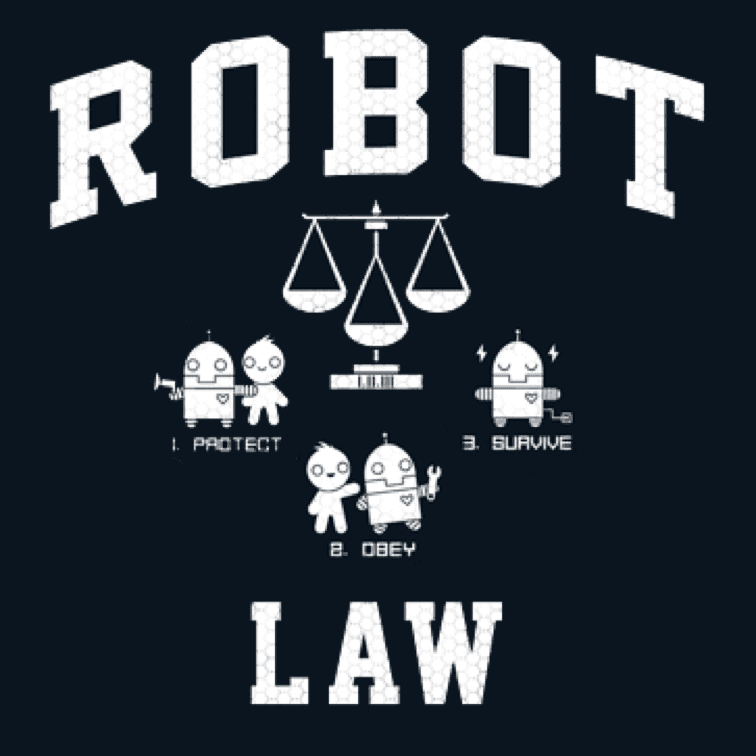
Three Laws of Robotics T-Shirt
What is Robotics? 10 Impacts of Robots in Everyday Life - TechDim Robotics is a subject in engineering which studies about robots. Robotics is a branch of engineering that deals with the conception, manufacture, design, and operation of Robots. Robotics isn't invented recently. Science fiction writer Isaac Asimov created his Three Laws of Robotics in 1942.
Why Asimov's Laws of Robotics Don't Work - Computerphile
Revisiting Asimov's Three Laws: ethics for robots or researchers? Asimov famously proposed the Three Laws of Robotics to make robots safe for human beings. Subsequently, the Three Laws have been dismissed as being 'too abstract' to be useful, but such dismissal has missed a critical subtlety in Asimov's proposal...

Isaac Asimov 3 Laws Of Robotics Glyph Icon Vector ...
On how Demerzel and the Three Laws of Robotics [SHOW/BOOK...] As we know from the Robots and Foundation books, the Three laws of robotics are instrinsically linked to the architecture of a positronic brain, and a robot basically can't function without them. Yet Demerzel seems to flaunt the 1st law quite frequently, as well as the 2nd law at times.

Three Laws of Robotics, Concept Vector Illustration. Rules ...
What Are the Laws of Robotics? So what exactly are those Laws of Robotics? The first three laws mentioned in "Runaround" are as follows What Rick probably means by the Rule 34 comment is that "Mortyplicity" is so full of decoys and complex yet rushed pondering on the Laws of Robotics that it's porn to sci-fi nerds.
In terms of machine ethics, what are the flaws of Asimov's ...
Isaac Asimov Facts | Mental Floss 10. Isaac Asimov coined the word robotics. Karel Čapek, a Czech writer, gave us robot when he used the word in a play in 1921. These laws explain that a robot cannot hurt a human, must obey humans, and must protect themselves, so long as it doesn't conflict with the first two laws.

Three Laws of Robotics | Bradscribe
Three Laws of Robotics | Asimov | Fandom The Three Laws of Robotics, also called the Three Fundamental Rules of Robotics, or the Four Laws of Robotics after the addition of the Zeroth Law, are fundamental laws that are inculcated into the positronic brains of all robots in Isaac Asimov's Robot series and more generally in his Foundation...
Robotics: Way To Become Specialist: 3 Laws Of Robotics (Paperback)
Asimov's Three Laws Robotics - Source Code Usage Examples... The Three Laws of Robotics (often shortened to The Three Laws or known as Asimov's Laws) are a set of rules devised by science fiction author Isaac Asimov.The rules were introduced in his 1942 short story "Runaround" (included in the 1950 collection I, Robot), although they had been foreshadowed in...
Starting A Conversation About Asimov's 3 Laws of Robotics ...
1613: The Three Laws of Robotics - explain xkcd This comic explores alternative orderings of sci-fi author Isaac Asimov's famous Three Laws of Robotics, which are designed to prevent robots from taking over the world, etc. These laws form the basis of a number of Asimov works of fiction, including most famously, the short story collection I...
The Laws of Robotics by Isaac Asimov (1902-1992) | english
Swarm robotics - Wikipedia Swarm robotics is an approach to the coordination of multiple robots as a system which consist of large numbers of mostly simple physical robots.It is supposed that a desired collective behavior emerges from the interactions between the robots and interactions of robots with the environment. This approach emerged on the field of artificial swarm intelligence, as well as the biological …
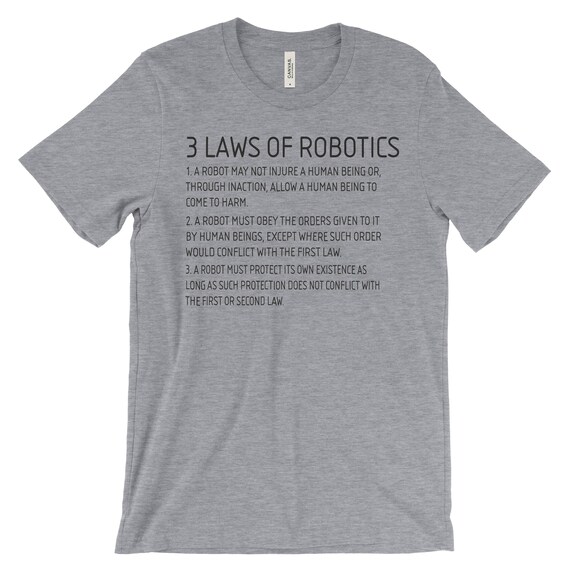
Three Laws of Robotics T-shirt on Gray White Black or Red | Etsy
Isaac Asimov's "Three Laws of Robotics" A robot may not injure a human being or, through inaction, allow a human being to come to harm. A robot must obey orders given it by human beings except where such orders would A robot must protect its own existence as long as such protection does not conflict with the First or Second Law.

PDF) The three laws of Robotics and Human | Lolo Chen ...
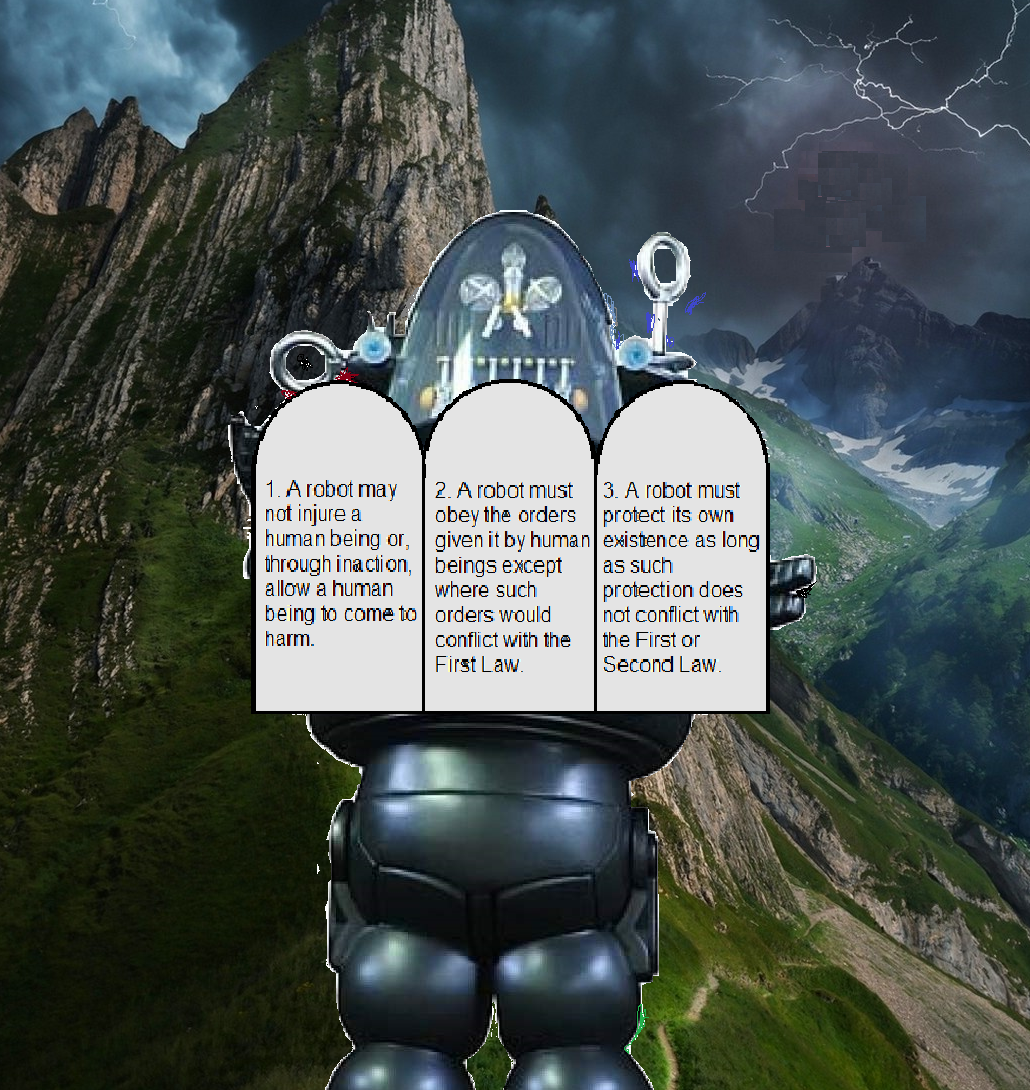
The Three Laws of Robotics are Bunk

Artificial Intelligence - The Three Laws of Robotics - Isaac ...

3 Laws of Robotics Game Review — Meeple Mountain
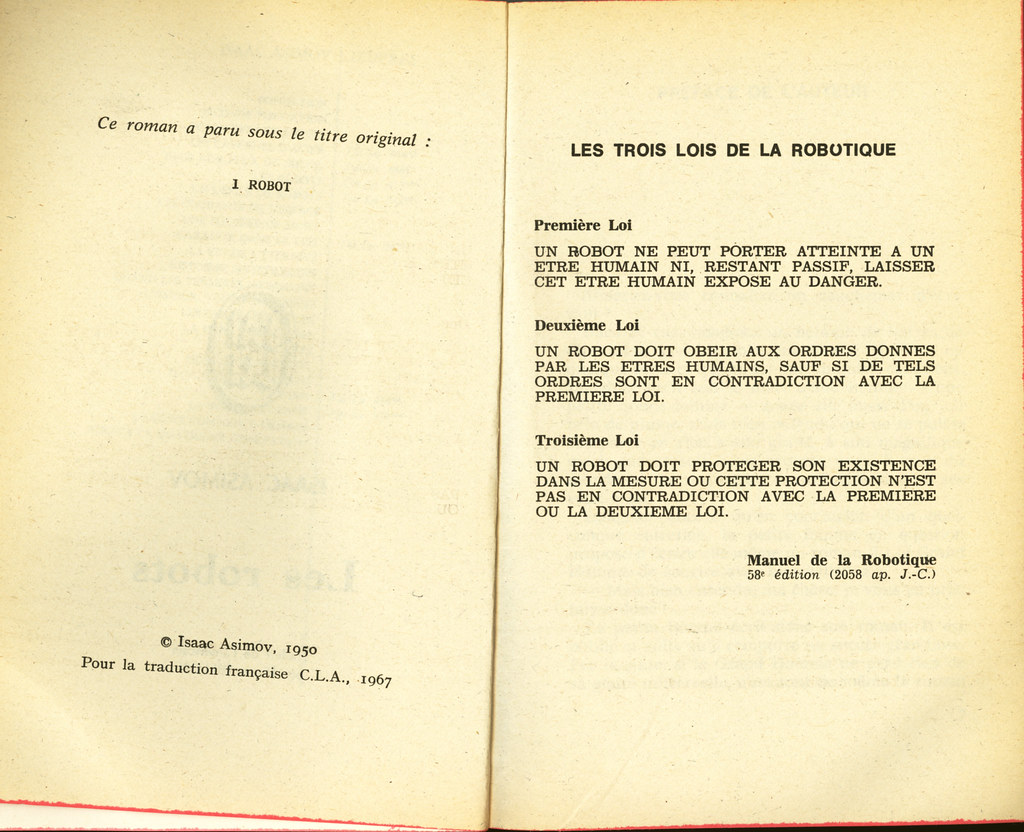
3 Laws of Robotics / 3 lois de la robotique | Written by Isa ...

3 LAWS front//back
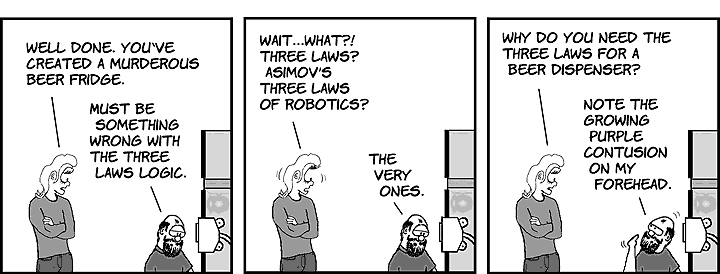
Will Machines Take Bribes Too?. The created will rule the ...

Isaac Asimov 3 Laws Of Robotics Line Icon Vector Illustration ...
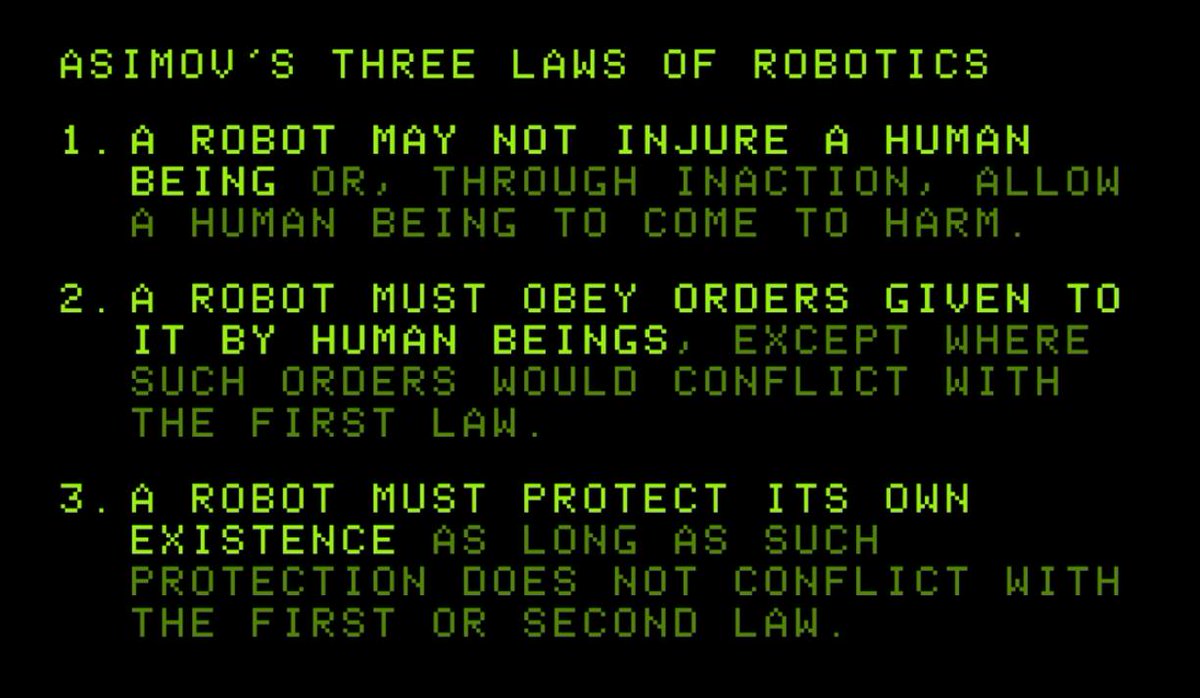
Richard Hay on Twitter: "Asimov's Three Laws of Robotics ...
Which writer was responsible for 'The Three Laws of Robotics ...
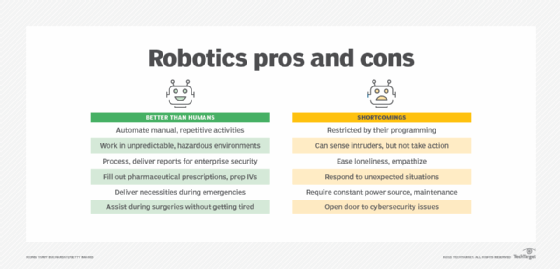
What is robotics?

Asimov's Three Laws of Robotics - Robots - Sticker | TeePublic AU
![PDF] Beyond Asimov : The Three Laws of Responsible Robotics ...](https://d3i71xaburhd42.cloudfront.net/b32a907c70d385eb3b429bcd49a3e4f28d101721/6-Table1-1.png)
PDF] Beyond Asimov : The Three Laws of Responsible Robotics ...
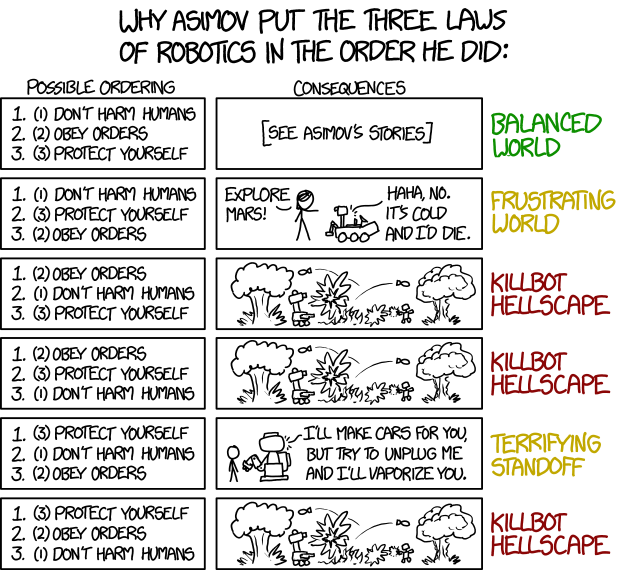
xkcd: The Three Laws of Robotics

Isaac asimov 3 laws of robotics line icon vector illustration ...

The Three Laws of Robotics (often shortened to

The Three Laws of Robotics by the science fiction...
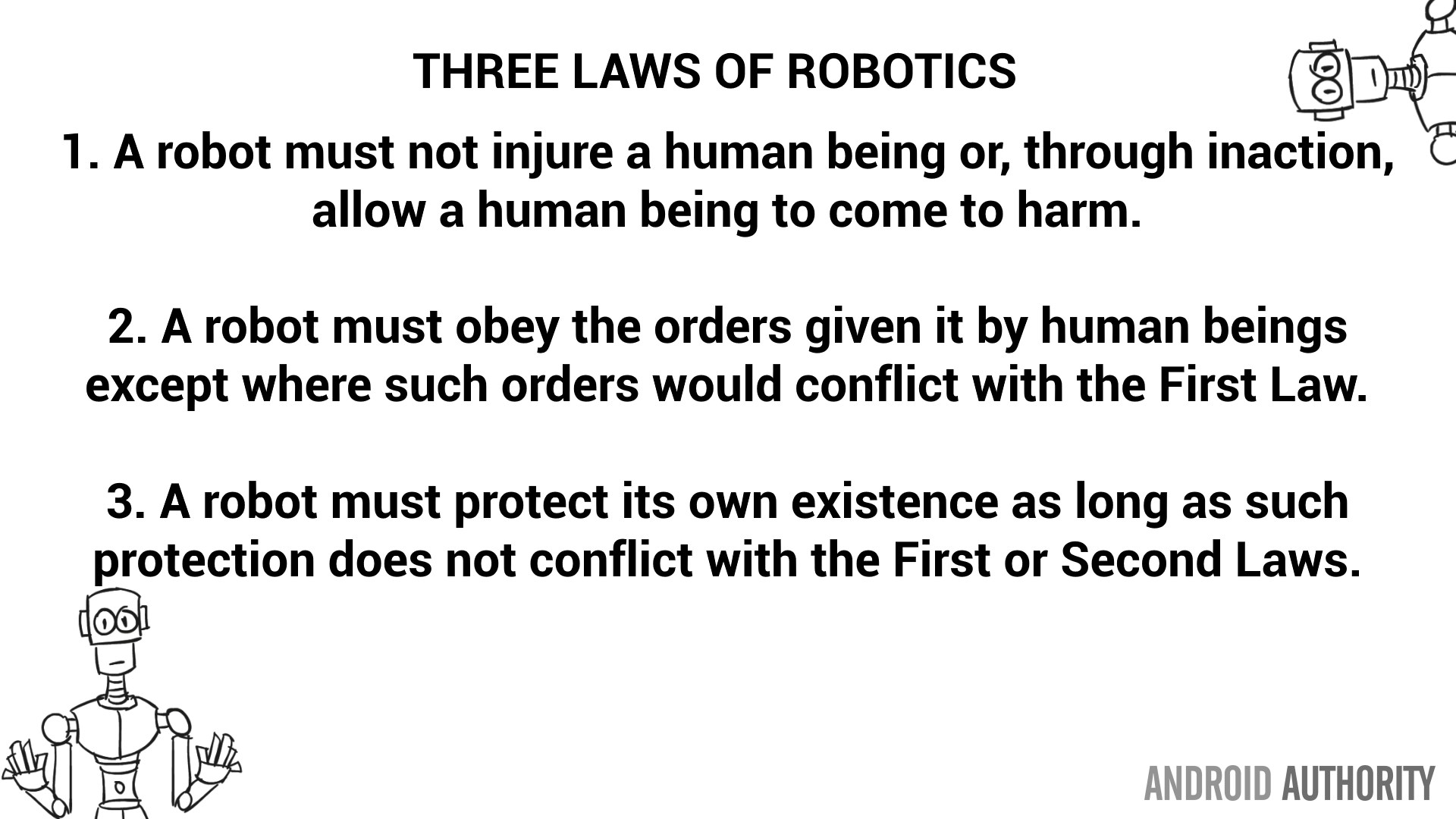
Why the three laws of robotics won't save us from Google's AIs

Asimov's 3 Laws of Robotics! Written in 1942. Where are we ...
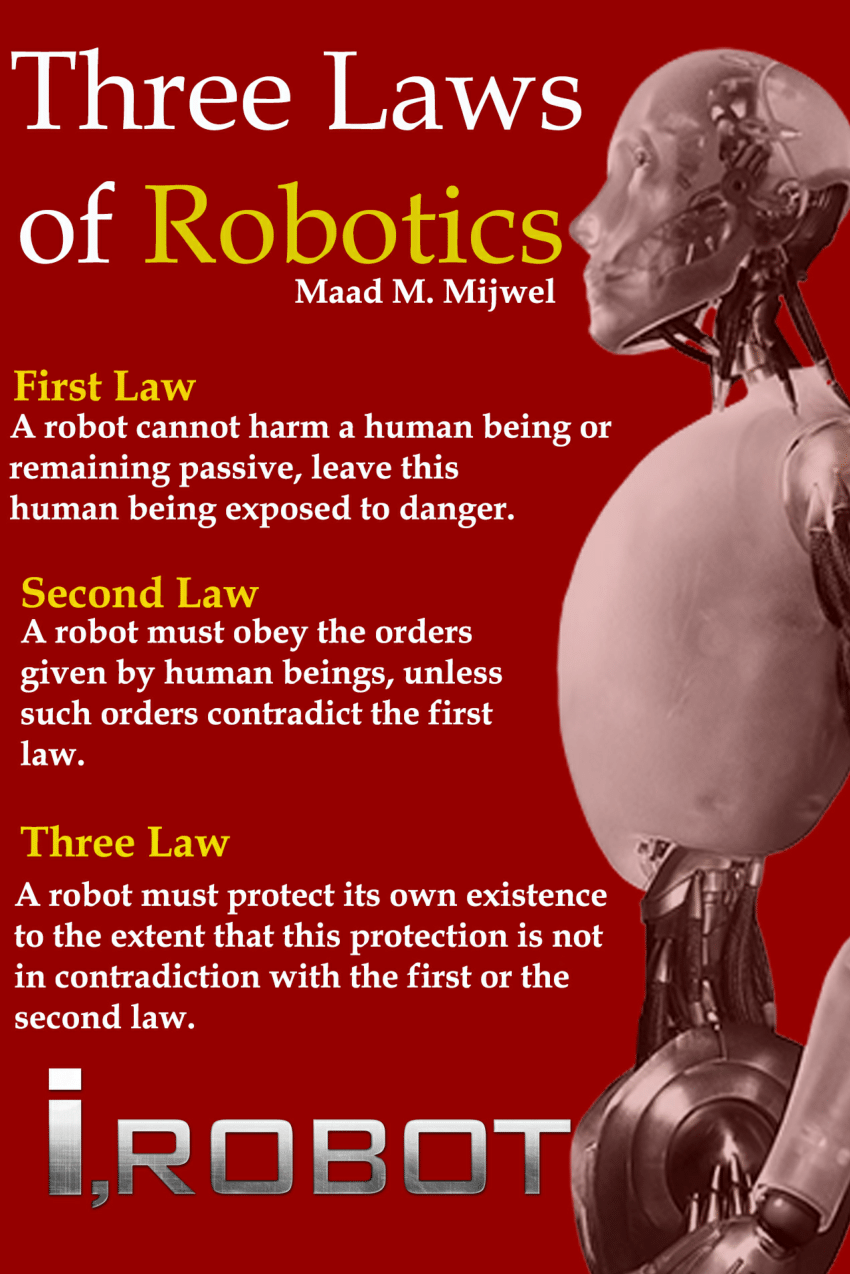
PDF) Three Laws of Robotics poster
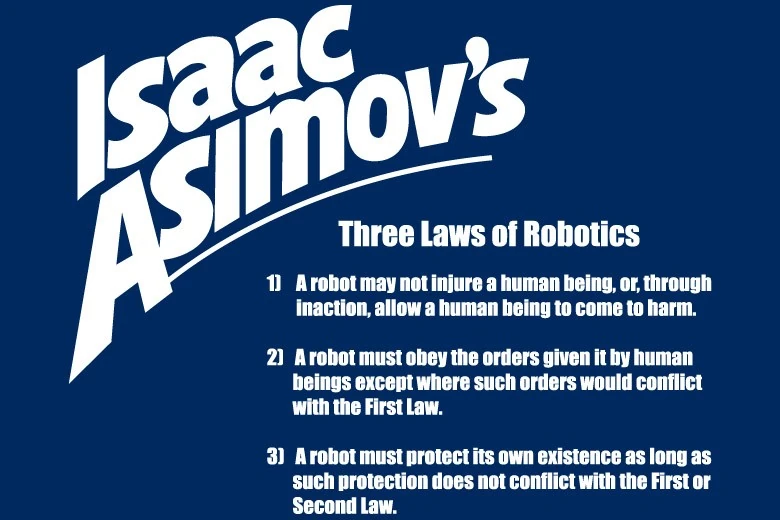
Asimov's three Laws | Galnet Wiki | Fandom
Kristine Belknap The Ethics of Robotics. - ppt video online ...

What Are Asimov's Three Laws of Robotics?
Dogs Don't Follow The 3 Laws Of Robotics - 9GAG

Review: 'Machinehood,' By S.B. Divya : NPR
Style transfer from 3 Laws of Robotics to 10 Commandments ...
0 Response to "41 3 laws of robotics"
Post a Comment